Restoring our coastal foreshore: Friends of Sorrento Beach & Marmion Foreshore
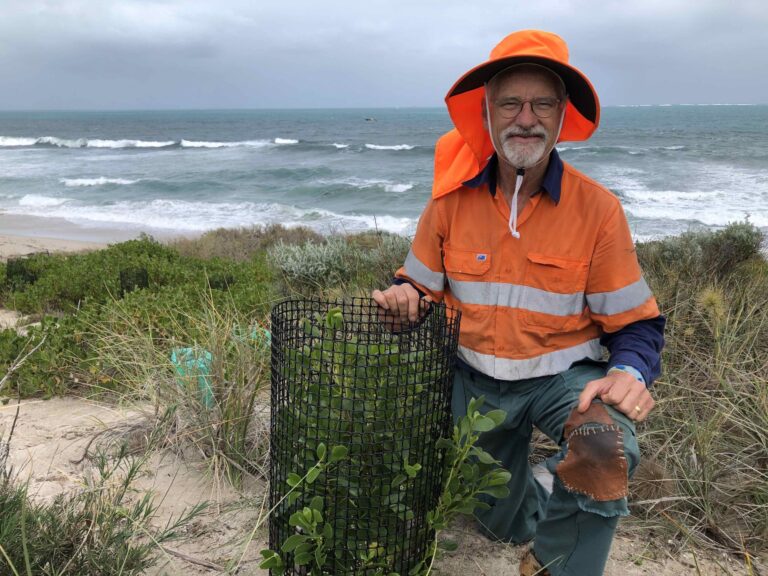
Words and photos – Michael Norman
My passion for caring for the land goes back decades. In the early 1980s, I first became involved in Landcare and tree planting projects as a volunteer in rural areas of southwest Western Australia.
One lesson was clear from the start: before planting a single tree, rabbit control is essential, because with the large numbers we were planting it was not feasible to erect tree guards. Always check for rabbit activity and if required, get rabbit control in hand before commencement of any tree planting event. Without it, all the planning and on-ground planting effort would be a complete waste of time!
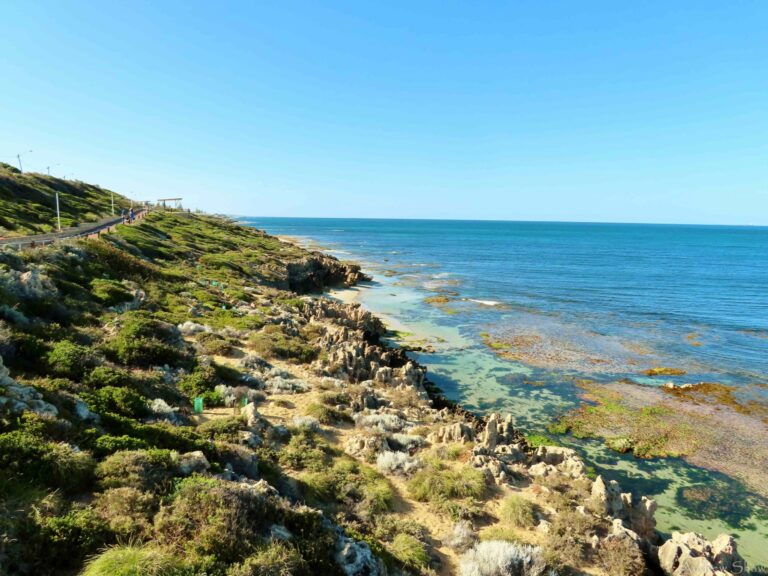
By 2000, I shifted my attention closer to home – our local urban reserves, including the beautiful coastal foreshore of Sorrento and Marmion. This area is a hub for recreation, with a shared coastal path used by thousands of walkers and cyclists each week, and beaches that host a major surf club and angling club.
Our local community group, Friends of Sorrento Beach & Marmion Foreshore, has planted nearly 38,000 native seedlings across 40 local species, removed countless weeds and litter. This has transformed the foreshore from 70% degraded to an independently assessed “very good” condition.
Along the way, we’ve also partnered with schools, clubs, and corporate groups to educate the community about the importance of coastal native ecosystems.
The challenges we face
These major threats have tested our efforts:
- aggressive weed species
- uncontrolled access due to fencing issues
- lack of community awareness of rabbit damage and impacts
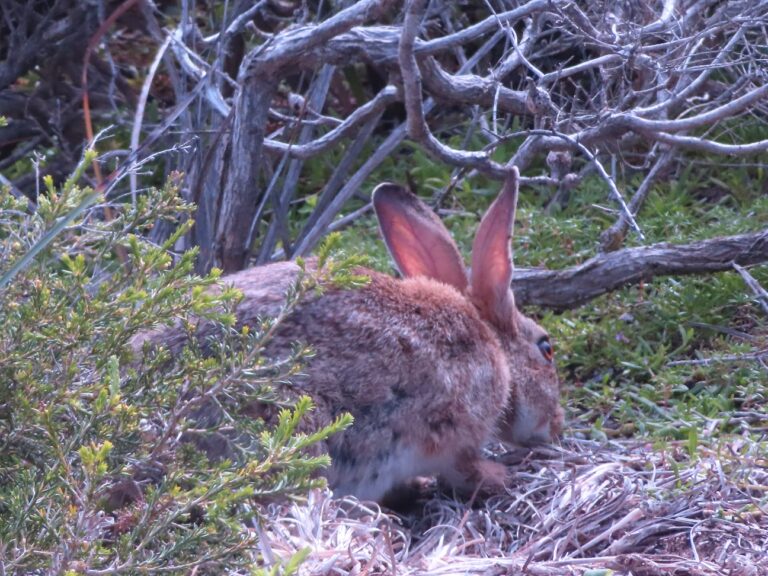
- rabbits – and to a lesser extent, feral cats and foxes.
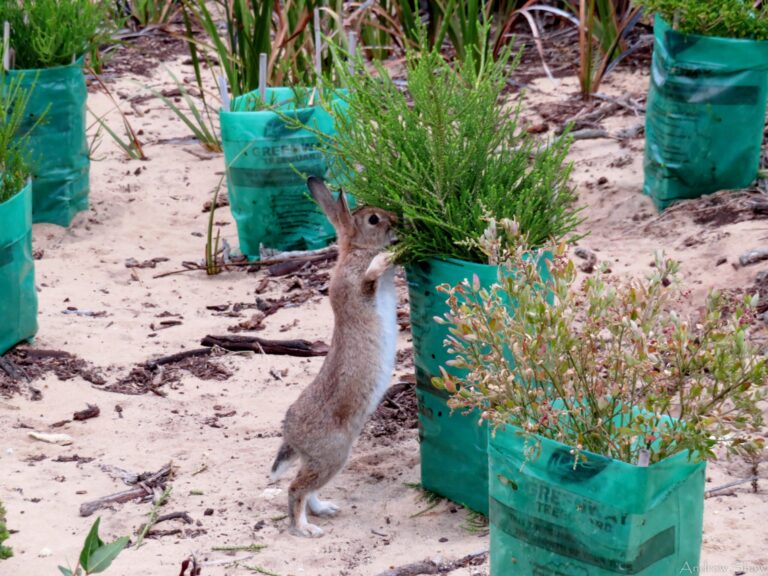
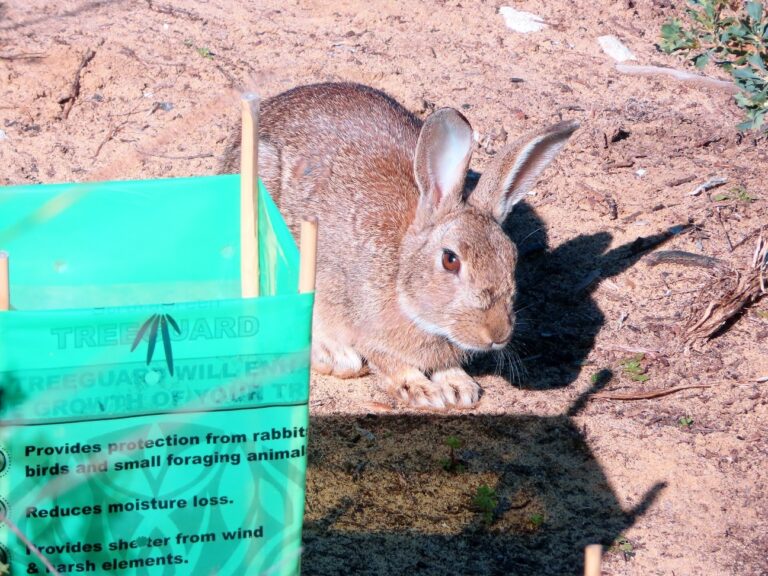
The presence of rabbits means that most seedlings are planted with tree guards, even those species that would not otherwise need them. This adds considerable time and cost to the planting effort. Some species that are particularly palatable to rabbits have been protected with “quokka” style (EcoTek Polymesh) guards that are left in place for years.
The rabbits have also greatly reduced the amount of natural regeneration, which should be enhanced by our weeding program. It appears that the long-term presence of rabbits has meant that some native flora species are not as abundant as they should be, such as Myoporum insulare (Blueberry tree), Calandrinia corrigioloides, Exocarpos sparteus (Broom ballart) and Spinifex hirsutus (Hairy spinifex).
The delicate herbaceous plant Trachymene coerulea (Blue Lace Flower), was present in Marmion, but since has become locally extinct. It does not appear that rabbits have had a role in reducing the density of any of the weed species we have been controlling, 13 species of which we have eradicated manually from the project area (and many other species now low in density) combined with some targeted herbicide application by the City of Joondalup.
Coordinated rabbit control efforts
The City of Joondalup is also working to manage rabbits, using cage trapping and RHDV release in recent years. While night shooting may also be a beneficial tool, it’s not permitted in our urban areas.
The last round of rabbit trapping in February 2025 was very successful. It was the first year in at least a decade that we have not seen any rabbits in the whole reserve. An increase in natural regeneration is evident, such as the germination of the semiparasitic Exocarpos sparteus, which is relatively rare in the area.
We also want to educate our local community: we know that some community members enjoy feeding the rabbits. Sharing how much damage rabbits do is very important.
This success in rabbit reduction and natural regeneration is a testament to the dedication of volunteers and the collaboration between volunteers, local government, and the wider community. Together, we’re restoring and protecting one of Perth’s most treasured coastal environments.
For more information on the project, email Michael Norman: mike.norman@bigpond.com